
Most Popular Types Of Metals and Their Uses
Metal Types Explained with Everyday Industrial Uses
Understanding the various types of metals is important when selecting materials for manufacturing, construction, fabrication, and industrial applications. Different metals offer unique combinations of strength, corrosion resistance, weight, conductivity, and workability. Knowing the characteristics of common metals and their properties can help you select the most appropriate material for your project.
Whether you’re sourcing materials for fabrication or structural applications in Philadelphia, PA, understanding how different metals perform is an important part of making an informed decision.
What Are Metals?
Metals are naturally occurring elements or alloys that are valued for their strength, durability, conductivity, and ability to be formed into a wide range of products. They are used in industries ranging from construction and transportation to manufacturing, energy, and infrastructure.
Many metals used in manufacturing are selected because they can be machined, welded, bent, or formed while maintaining their structural integrity. The specific properties of each metal determine where it performs best. Common characteristics of metals include:
- High strength compared to many non-metal materials
- Good thermal and electrical conductivity
- Durability in demanding environments
- Ability to be fabricated into various shapes and sizes
- Recyclability for future use
Classification of Metals
Metals are generally grouped into categories based on their composition and properties. Understanding these classifications can make it easier to narrow down material options for specific applications. The most common classifications include:
- Ferrous metals, which contain iron and are often used for structural applications because of their strength.
- Non-ferrous metals, which do not contain significant amounts of iron and are often selected for corrosion resistance, conductivity, or reduced weight.
- Alloys, which combine two or more elements to improve specific mechanical or chemical properties.
Popular Types of Metals: Quick Comparison
Each metal offers advantages for different industries and applications. Learn about the pros and cons of popular types of metals:
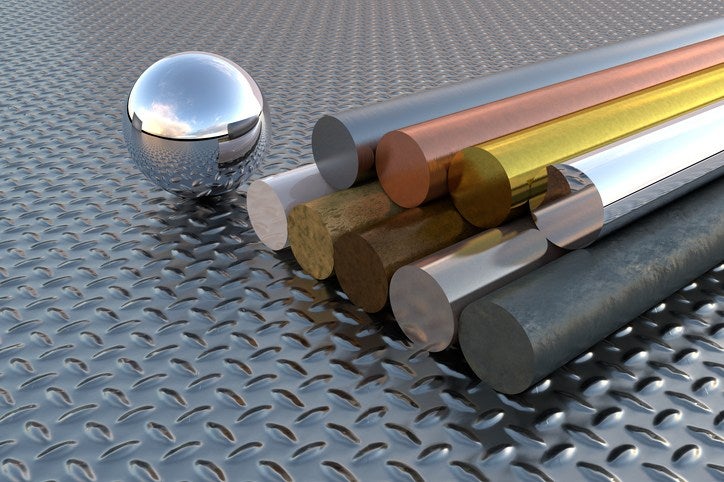
- Carbon Steel: High strength, economical, and widely used for structural and manufacturing applications.
- Stainless Steel: Excellent corrosion resistance and commonly used where durability and cleanliness are important.
- Aluminum: Lightweight, corrosion resistant, and easy to fabricate.
- Copper: Excellent electrical and thermal conductivity.
- Brass: Good corrosion resistance with excellent machinability.
- Bronze: Durable alloy commonly used for bearings, marine hardware, and industrial components.
Most Popular Types of Metals & Their Uses
Different industries rely on different materials based on strength, weight, corrosion resistance, and fabrication requirements.
- Carbon Steel: Frequently used for structural steel, machinery, equipment, steel tubing, and general manufacturing because of its strength and affordability.
- Stainless Steel: Commonly used for food processing equipment, pharmaceutical manufacturing, medical equipment, chemical processing, commercial kitchens, and architectural applications because of its corrosion resistance.
- Aluminum: Often selected for transportation equipment, aerospace components, architectural products, and consumer goods where lower weight is important.
- Copper: Widely used for electrical wiring, plumbing systems, heat exchangers, and industrial equipment because of its conductivity.
- Brass: Commonly used for valves, fittings, hardware, plumbing components, and decorative applications.
- Bronze: Frequently used for bearings, bushings, marine hardware, gears, and industrial wear components.
How to Choose the Right Metal
Selecting the appropriate material depends on the specific requirements of your application. Performance, environment, fabrication methods, and budget should all be considered before choosing a material. Important factors include:
- Required strength and load capacity
- Corrosion resistance requirements
- Weight limitations
- Weldability and machinability
- Operating environment
- Material availability
- Project budget
Advantages of Using Metals
Metals continue to be the preferred material for many commercial and industrial applications because they offer a combination of mechanical performance and long service life. Advantages of using metals include:
- High structural strength
- Long service life
- Excellent durability
- Wide range of available grades
- Good fabrication characteristics
- Recyclability
- Suitability for many metal applications in construction
Talk to McKnight Steel & Tube Co. About Your Metal Requirements
Choosing from the many metal types for industrial use depends on your project’s specifications, operating environment, and fabrication requirements. Understanding the characteristics of different materials can help improve performance and reduce unnecessary costs.
If you’re looking for quality metal products in Philadelphia, PA, McKnight Steel & Tube Co. can help you identify materials that meet your project specifications and application requirements.
Frequently Asked Questions
Selecting the right metal often depends on strength requirements, corrosion resistance, fabrication methods, and the intended application. Below are answers to some common questions.
What Are the Most Common Types of Metals?
Some of the most widely used metals include carbon steel, stainless steel, aluminum, copper, brass, and bronze. Each offers different properties that make it suitable for specific industrial and commercial applications.
What Are the Differences Between Ferrous & Non-Ferrous Metals?
Ferrous metals contain iron and are generally known for their strength. Non-ferrous metals contain little or no iron and are often selected for corrosion resistance, lighter weight, or improved electrical conductivity.
Which Metals Are Most Commonly Used in Manufacturing?
Carbon steel, stainless steel, aluminum, and copper are among the most common metals used in manufacturing because they provide a balance of strength, workability, and performance across a wide range of industries.
Which Metal Is Best for Construction Projects?
The best material depends on the application. Carbon steel is commonly used for structural applications, while stainless steel, aluminum, and other alloys may be selected where corrosion resistance or reduced weight is important.
Why Are Metals Used in So Many Industries?
Metals offer strength, durability, machinability, recyclability, and consistent performance, making them suitable for manufacturing, construction, transportation, infrastructure, and many other industrial applications.