

-
Carbon Steel Pipe vs. Steel Tubing: Key Differences, Uses, and Specifications
Pipe vs. Tubing at a Glance
- Pipe is specified by NPS and Schedule.
- Tubing is specified by actual OD and wall thickness.
- Pipe is commonly used for pressure and flow applications.
- Tubing is commonly used for fabrication, machinery, hydraulic, instrumentation, and structural applications.
- Similar dimensions do not make pipe and tubing interchangeable.
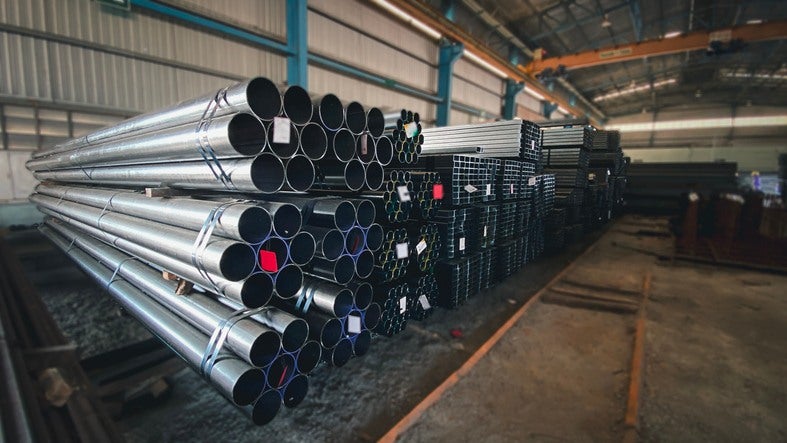
Key Differences Between Carbon Steel Pipe and Steel Tubing
Although carbon steel pipe and steel tubing can look similar, they are specified differently and often serve different purposes.
- Pipe is typically used to transport liquids, gases, steam, or air, and may also be used in structural applications.
- Tubing is typically used for fabrication, structural applications, machinery, and conveying liquids and gases.
- Pipe is measured using Nominal Pipe Size (NPS) and Schedule.
- Tubing is measured using actual outside dimensions and wall thickness.
If a drawing or specification calls for pipe, tubing is not automatically an acceptable substitute.
Pipe vs. Tubing Comparison Chart
Feature
Carbon Steel Pipe
Steel Tubing
Measurement
NPS & Schedule
Actual OD & Wall Thickness
Common Shape
Round
Round, Square, Rectangle
Typical Use
Flow, pressure, and structural applications
Structural, mechanical, and fluid conveyance applications
Tolerances
Standard pipe tolerances
Typically tighter dimensional tolerances
Common ASTM Standards
A53, A106
A500, A513
Used With Fittings
Frequently
Less frequently
When to Use Carbon Steel Pipe
Carbon steel pipe is commonly used for:
- Compressed air systems
- Water lines
- Process piping
- Natural gas systems
- Fire sprinkler systems
- Mechanical contractor projects
Pipe is usually selected when pressure, flow, fittings, or piping standards drive the specification.
A typical pipe callout includes:
- NPS size
- Schedule
- Grade
- ASTM specification
Example:
2″ Sch. 40 ASTM A53 Grade B Pipe
When to Use Steel Tubing
Steel tubing is commonly used for:
- Equipment frames
- Structural supports
- Machine components
- Material handling equipment
- Fabricated assemblies
- Roll cages
- Hydraulic systems
- Instrumentation systems
- Sanitary process systems
Tubing is often selected when outside dimensions, wall thickness, and fit are critical. It is also commonly specified for hydraulic, instrumentation, heat exchanger, and sanitary process applications.
A typical tubing callout includes:
2.000″ OD x .120″ Wall ASTM A513 Tubing
Is Pipe Less Expensive Than Tubing?
Not always.
In many applications, pipe costs less than tubing because it is manufactured to standard pipe dimensions. However, tubing often provides tighter tolerances and may reduce fabrication or machining time.
The lowest material price is not always the lowest total project cost.
Can Pipe and Tubing Be Used Interchangeably?
The most common mistake is assuming pipe and tubing with similar outside diameters are interchangeable.
They often are not.
Before ordering, verify:
- ASTM specification
- Outside diameter
- Wall thickness
- Tolerance requirements
- Pressure requirements
- Customer or engineering specifications
Carbon Steel Pipe and Tubing Supplier Since 1954
McKnight Steel & Tube stocks a wide range of carbon steel pipe and tubing products.
We can provide:
- Carbon steel pipe
- Round tubing
- Square tubing
- Rectangular tubing
- Cut-to-length material
- Threading
- Deburring
- Material Test Reports (MTRs)
If we don’t stock the size you need, we’ll source it through our supplier network.
Request a quote today.
Frequently Asked Questions About Carbon Steel Pipe and Steel Tubing
Can tubing be used instead of pipe?
Sometimes, but only if the tubing meets all engineering, pressure, dimensional, and specification requirements.
Why is pipe measured differently than tubing?
Pipe sizing was developed around standardized flow and fitting requirements. Tubing is measured by its actual dimensions because fit and fabrication are usually more important.
Is tubing stronger than pipe?
Not necessarily. Strength depends on grade, wall thickness, manufacturing method, and specification.